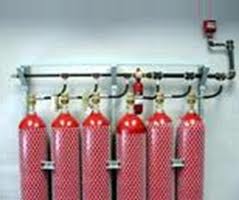
Fire extinguisher hydrotesting (hydrostatic pressure testing) is a mandatory safety procedure under Indian Standard IS 2190. It is not optional. If your fire extinguishers have not been hydrotested within the required timeframe, your fire NOC can be cancelled, your insurance claim can be rejected, and most importantly, the extinguisher may fail when you need it most.
This guide explains what hydrotesting is, when it is required, how it is done, and what the law says.
What is Hydrotesting?
Hydrotesting is a pressure test where the fire extinguisher cylinder is filled with water and pressurised to 125% to 150% of its normal operating pressure for 30 seconds. This checks whether the cylinder can safely hold pressure without leaking, bulging or rupturing.
The test is done with water (not air or gas) because water is incompressible — if the cylinder fails, it will not explode violently the way a gas-filled cylinder would. This makes the test safe for the technician.
When is Hydrotesting Mandatory?
As per IS 2190 and IS 307:
ABC / DCP (Dry Chemical Powder) extinguishers: Every 5 years
CO2 extinguishers: Every 3 years (as per IS 307)
Foam and Water extinguishers: Every 5 years
The clock starts from the date of manufacture stamped on the cylinder, not the date of purchase. If you buy a fire extinguisher that sat in a warehouse for 2 years, it may need hydrotesting sooner than you think.
How is Hydrotesting Done?
Step 1: Visual Inspection
The technician examines the cylinder for visible damage — dents, corrosion, cracks, damaged threads, or signs of chemical exposure. If the cylinder fails visual inspection, it is condemned immediately.
Step 2: Emptying and Valve Removal
The extinguisher is discharged completely and the valve assembly is removed. The inside of the cylinder is inspected for internal corrosion or lining damage.
Step 3: Thread Cleaning
The threads on the cylinder neck and valve are cleaned and inspected for wear or damage.
Step 4: Hydrostatic Pressure Test
The cylinder is filled with water and connected to a pressure testing rig. Pressure is raised to 125% of working pressure for ABC/DCP/Foam/Water cylinders and 150% for CO2 cylinders. The pressure is held for 30 seconds.
Step 5: Evaluation
After depressurisation, the cylinder is inspected for:
- Permanent volume expansion (should not exceed 10%)
- Visible deformation or bulging
- Leakage or dripping
If any of these are found, the cylinder is condemned and must be destroyed (not re-used).
Step 6: Drying, Refilling and Sealing
Passing cylinders are dried thoroughly, refilled with the correct extinguishing agent, re-pressurised, and sealed with a new tamper seal. A hydrotesting certificate is issued with the test date, pressure applied, and result.
What is a Hydrotesting Certificate?
A hydrotesting certificate is your proof of compliance. It contains:
- Cylinder serial number
- Date of test
- Test pressure applied
- Result (pass/fail)
- Next due date
- Name and stamp of the testing agency
Fire inspectors and insurance surveyors ask for this certificate during audits. Without it, you cannot prove compliance. Surakchha issues a signed certificate for every extinguisher we hydrotest.
What Happens if You Don’t Hydrotest?
Fire NOC cancellation: During a fire department inspection, if your extinguishers are overdue for hydrotesting, your fire NOC can be suspended or cancelled.
Insurance claim rejection: If a fire occurs and your extinguisher was not hydrotested as per schedule, the insurance company can reject your claim on grounds of non-compliance.
Cylinder failure: An untested cylinder may have internal corrosion or micro-cracks that cause it to rupture when operated, injuring the user.
Legal liability: In case of a fire incident, non-compliance with IS 2190 can make the building owner legally liable.
How Much Does Hydrotesting Cost?
Hydrotesting costs vary by extinguisher type and size:
ABC/DCP 4kg-9kg: Rs. 300-700 per cylinder
ABC/DCP 25kg-50kg: Rs. 600-1,300 per cylinder
CO2 4.5kg-9kg: Rs. 500-1000 per cylinder
Foam/Water 9L-50L: Rs. 400-900 per cylinder
The cost includes testing, refilling, re-pressurising, tamper seal, and certificate. Surakchha offers AMC contracts that include annual servicing and scheduled hydrotesting so you never miss a deadline.
Who Can Perform Hydrotesting?
Hydrotesting must be performed by a qualified fire safety service provider with proper pressure testing equipment.
Schedule Your Hydrotesting
Call: +91-9411411587, 0562-4003732
Email: enquiry@surakchha.net
WhatsApp: +91-9411411587
Website: www.surakchha.com
Leave a Reply